
Let's start with the thing nobody tells you
Your arousal isn't slower because you've lost desire. It's slower because the medication doing something important for your mental health or physical health also changed how your nervous system responds to stimulation. That's not a failure. It's a side effect you can work around.
Honestly, this is one of the most common things I hear in my practice. Someone starts an antidepressant, switches birth control, or gets their blood pressure under control and suddenly their body needs 30 minutes to get where it used to get in five. The panic that follows is huge. "Did my sexuality just disappear? Is this forever? Am I broken?" The answer to all three is no.
Here's the thing about medication and arousal: your medication isn't killing your desire. It's adding friction to the ignition system.
Why medications change your warm-up timeline
SSRIs and SNRIs (the most common antidepressants) work by keeping serotonin and norepinephrine circulating in your brain longer. This is great for mood stability and anxiety. It's also genuinely protective for many people who've struggled with intrusive thoughts or panic. But serotonin also influences the dopamine pathways that drive sexual motivation and response. More serotonin circulating = less dopamine urgency. Your brain is chemically calmer, which can mean arousal builds more gradually.
Birth control pills and hormonal IUDs suppress ovulation by keeping estrogen and progesterone at steady levels. This prevents the hormonal fluctuations that trigger your cycle. It also changes how quickly tissue engorges during arousal and how sensitive nerve endings respond to touch. Again, this is the price of preventing unwanted pregnancy. But it's a real price.
Blood pressure meds like beta-blockers reduce adrenaline signaling throughout your body. Adrenaline is actually a component of sexual arousal in the early stages. Less adrenaline = less of that quick heart-rate spike that jumpstarts the process. You get a slower ramp, not no ramp.
The pattern across all of these: your nervous system is being asked to do something different. Your body hasn't forgotten how to respond. The signals are just traveling a longer route.
What changes and what doesn't
Here's what's important to separate: warm-up time is not the same as capacity for pleasure. One of the most common misunderstandings I see is someone conflating the two. They think, "If it takes me longer to get aroused, I must not want it as much." Wrong. You might need 40 minutes of stimulation instead of 10, but once you're fully aroused, your orgasm intensity, frequency, and satisfaction can be completely unchanged. Sometimes better.
I've had clients report that their most profound orgasms came after starting medication because they finally had the mental clarity and emotional stability to fully be present instead of managing anxiety or intrusive thoughts. The pathway to get there was longer. The destination was richer.
What also doesn't change: your clitoris is still the nerve-dense powerhouse it always was. The neural pathways for pleasure haven't been deleted. Your ability to experience sensation and intensity remains intact. You're not dealing with a loss of capacity. You're dealing with a different activation timeline.
Why lemon clitoral vibrators work so well for this specific problem
Lemon vibrators, particularly devices like the clitoral vibrator, use suction and gentle pulsing rather than pure vibration. This matters enormously when you're rebuilding a warm-up timeline.
Here's why: suction doesn't require the same kind of repeated friction that traditional vibrators do. With a wand or bullet, you need consistent motion over time to build arousal. Your nervous system has to register micro-movements across minutes. With suction-based stimulation, each pulse is a distinct neurological event. Your system gets clearer input signals, which means arousal can build with less total time and less reliance on the dopamine-driven urgency that medication has dampened.
It's not that suction magically fixes medication side effects. It's that the mechanics of suction align better with how your nervous system is currently operating. You're working with your nervous system's new pace instead of fighting against it.
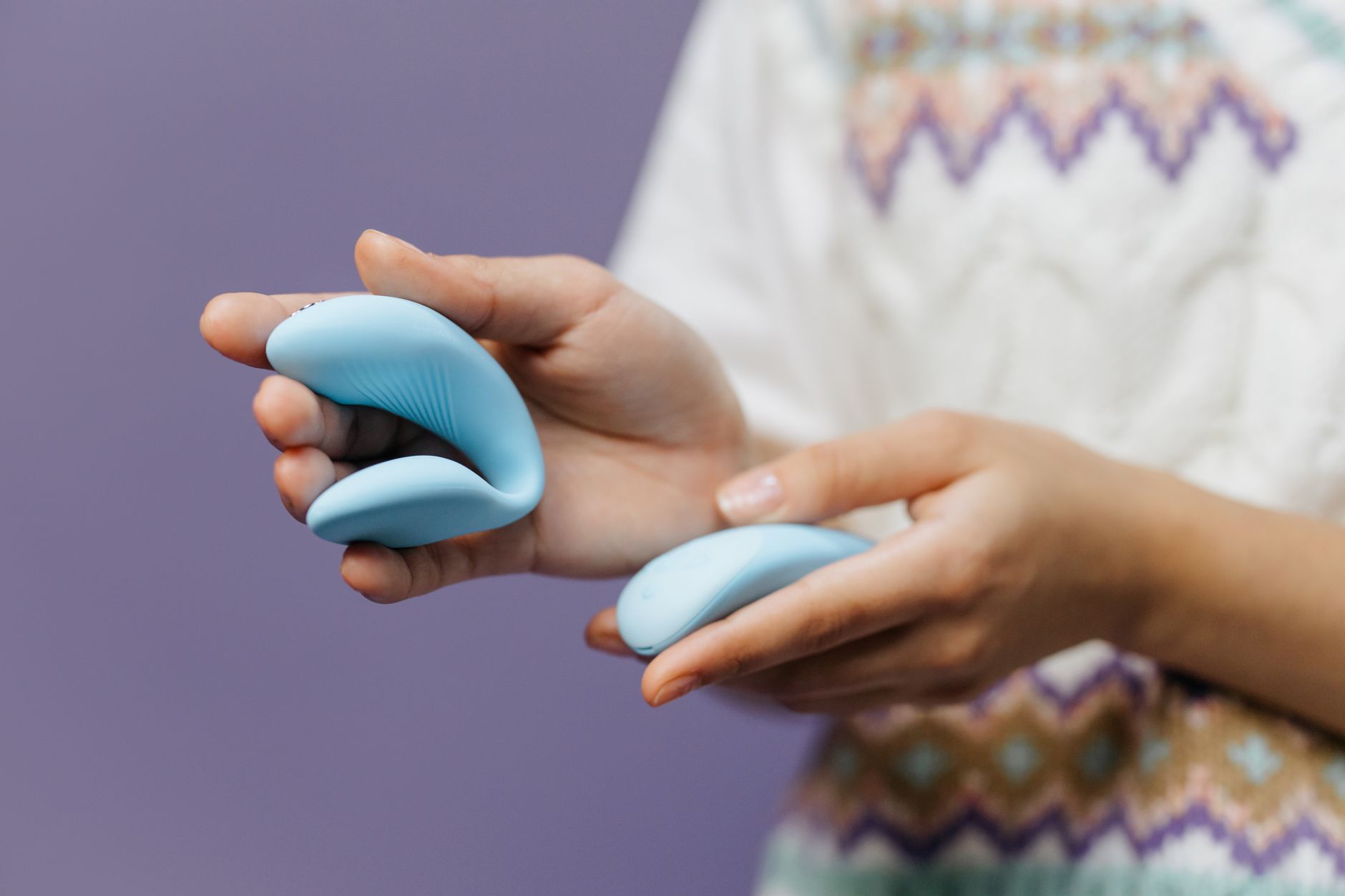
Photo by cottonbro studio on Pexels
The practical strategy: reframing warm-up time
One major mindset shift helps here. Stop thinking of your warm-up as "foreplay" or a hurdle to get through. Reframe it as part of the experience itself.
When medication has slowed your arousal, trying to rush it creates two problems: first, your nervous system tenses up, which actually slows arousal further. Second, you spend the entire experience frustrated rather than present. Neither helps.
Instead, budget 20-30 minutes specifically for warm-up, and treat that time as its own thing. Not as a means to an end. You're not warm-up toward something. You're exploring sensation for sensation's sake. This mental shift alone speeds things up because you remove the performance pressure that creates physical tension.
Start at a lower suction intensity on your lemon clitoral vibrator. Pattern 1 or 2. Let your body respond without rushing. Notice what's different. Is sensation building but slower? Great. Is your mind wandering? Completely normal. Gently bring attention back to sensation. This isn't meditation. You're just noticing instead of narrating.
After 10-15 minutes, you'll likely feel a shift. Your tissues engorge differently when arousal has been given time. Your nerve sensitivity increases. This is when you might move to a higher pattern or adjust angle. The second half of your warm-up feels noticeably different from the first because you've actually gotten your nervous system fully online.
What to do if warm-up time is still frustrating
Sometimes extending warm-up time isn't enough. Sometimes you're present, you're patient, and your body still isn't cooperating. That's a sign something else is going on, and it's worth naming.
First: are you actually wanting this at this moment, or are you going through the motions because you think you should? Medication can flatten motivation as well as response. If you're not genuinely interested, no vibrator fixes that. Sometimes the honest conversation is, "I don't want sex today, and that's okay." That's different from, "I want it but my body won't cooperate."
Second: are you struggling with performance anxiety about the medication change itself? Have you and your partner or yourself internalized the message that this is a problem to be solved? That story creates tension, which genuinely blocks arousal. Separating the story from the physiology helps. Your medication isn't a sexual failure. It's a side effect that comes with a medication doing something important for you.
Third: check the medication timing. Some medications have peak impact at certain times of day. Taking your SSRI at night instead of morning, for instance, might mean you have clearer arousal response in early evening. Small tweaks sometimes work.
If none of that resonates, it's worth checking in with your prescriber. Not all SSRIs affect sexual response equally. Some people have much better outcomes on different antidepressants. Same with birth control formulations. Your provider has options, and if sexual response is significantly impacted, you're worth optimizing for.
The partner conversation
If you're partnered, this timeline change affects both of you. The temptation is to frame it as your problem to solve. It's not. It's a system you're both in.
A useful conversation goes: "My medication changed how quickly my arousal builds. That's not about desire. It's a side effect. Here's what I'm exploring to work with it. Here's what helps from you." That's clarity without shame.
What helps from a partner: patience, which sounds simple but means actually buffering time without resentment. If warm-up takes longer, that time needs to exist in your schedule without rushed energy. It also helps when a partner doesn't interpret the slower timeline as lack of interest. "You're not as into me anymore" is a story that can creep in when arousal looks different. Naming that explicitly prevents it from festering.
What doesn't help: pressure to orgasm faster, commentary on whether you're "taking too long," or treating warm-up as a chore to get through. Those things create the exact neurological tension that blocks arousal further.
When to bring in professional support
If you've given yourself 3-4 weeks of patient exploration with a lemon clitoral vibrator and warm-up time still feels impossible, or if you're having pain, numbness, or complete absence of sensation, that's worth discussing with your doctor. Sometimes medication side effects need medical attention, not just patience and the right toy.
A good conversation with your prescriber starts with specifics: "I start feeling aroused after about 40 minutes now, where it used to be 10. Orgasm intensity is still fine, but the timeline is the frustration." That level of detail helps your provider understand whether this is a side effect worth adjusting the medication for, or whether it's within a range that many people adapt to.
You're not being "difficult" or "demanding" by naming this. Sexual function is part of overall health. Your medication should work for you, not against you.
FAQ
Does slower warm-up from medication ever go back to baseline?
Sometimes yes, sometimes no. Many people find their nervous system adapts after 3-6 months on medication. Your body recalibrates and arousal speed improves somewhat. But not always to where it was. If the medication is genuinely helping your mental or physical health, many people find the trade-off is worth accepting the new timeline. Others work with their provider to switch medications. Both are reasonable choices.
Can you use a lemon vibrator on a higher pattern right away to speed things up?
Technically yes, but it doesn't usually help. Starting at high intensity when your nervous system is still ramping up often feels uncomfortable or even numb. The suction-based design works because it builds gradually. Starting low and increasing over time gives your body space to respond. Rushing it is like turning up the heat before the oven is preheated. It doesn't cook faster.
Is it normal to need different warm-up time depending on the day?
Completely. Stress, sleep, how much caffeine you've had, whether you ate that day, relationship dynamics. all of it influences arousal speed. Medication changes create a baseline shift, but that baseline still fluctuates. Some days you might need 20 minutes. Other days 40. That variance is normal.
Should you talk to your partner about medication changes affecting arousal?
Yes. Not as a confession or apology. As information. "My SSRI is helping my anxiety, and it's slowed how quickly I feel aroused. Here's what that means. Here's what I'm experimenting with." Most partners appreciate clarity over silence and speculation. Silence creates the story that you're not interested. Clarity prevents that story from taking root.
Can switching the time of day you take your medication help?
Possibly. Some people find their arousal response is better at certain times of day relative to when they dose medication. It's worth experimenting, but always check with your prescriber before changing medication timing. Some medications have specific dosing schedules for safety reasons.
Is it better to warm up solo or with a partner when you're managing medication-related timeline changes?
Both work. Solo exploration lets you notice your own response without performance pressure. That feedback helps you understand your new baseline. With a partner, you get to explore how their touch and presence factor in. Often a combination works best: solo time to understand your new timeline, then partnered time once you know what you're working with.
The bottom line
Medication that's helping your mental or physical health is worth the adjustment to your sexual timeline. Your body hasn't broken. Your nervous system is operating at a different pace, and that's something you can learn to work with. A lemon clitoral vibrator helps because the mechanics of suction align with how your nervous system currently processes arousal. But the bigger win is permission. Permission to take longer. Permission to explore warm-up as part of the experience, not a hurdle. Permission to ask your prescriber for help if the shift is genuinely unmanageable.
Your medication isn't the enemy of your sexuality. It's part of taking care of yourself. Everything else is just learning to dance with the new timeline.
If you're navigating this and want to explore more about how different tools can support your pleasure during medication adjustments, reach out. We're here to help you figure out what actually works for your body as it is right now.