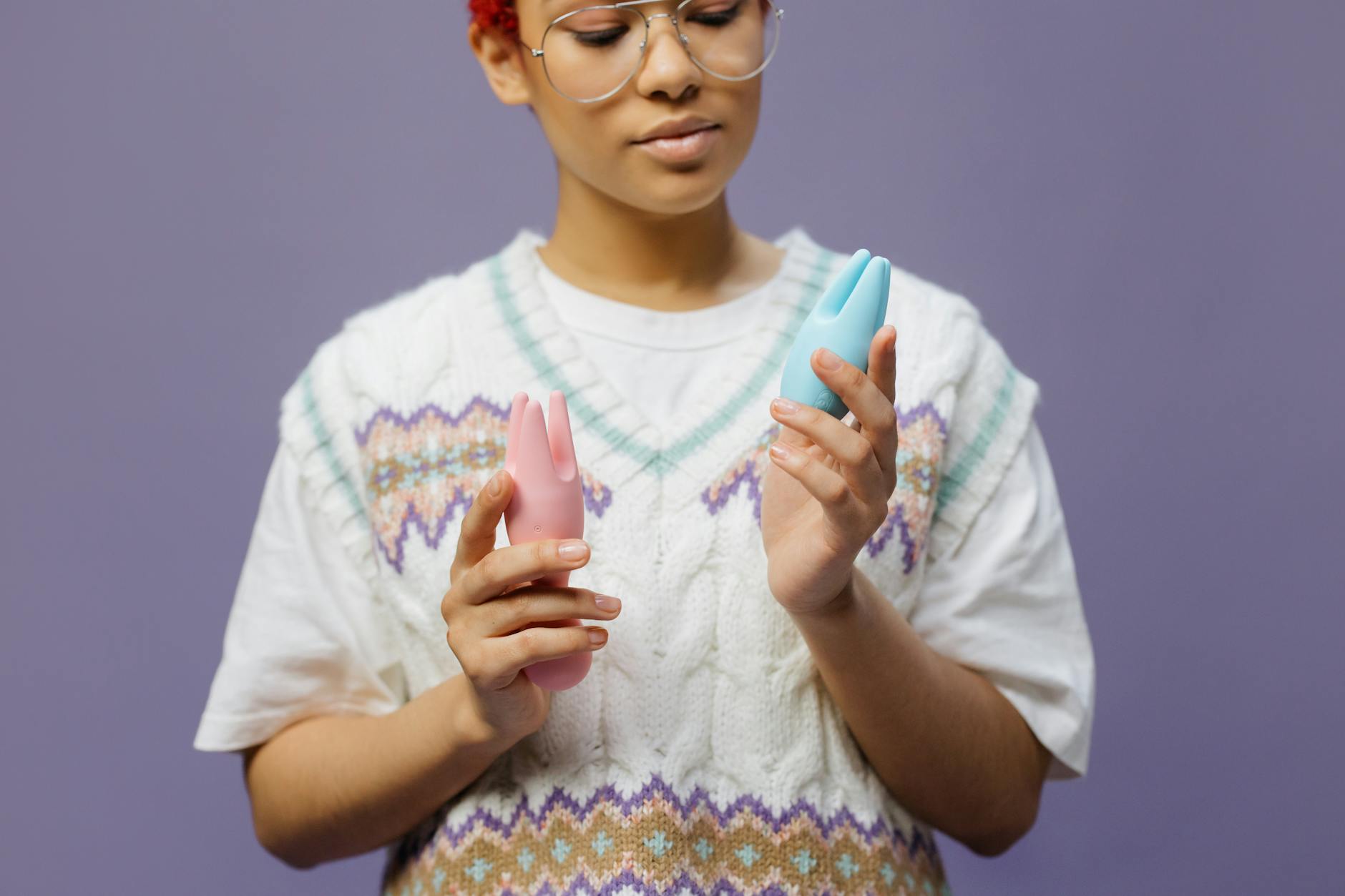
How Lemon Vibrators Work Across Different Relationship Stages
Your pleasure needs aren't static. Here's how lemon clitoral vibrators fit into dating, early commitment, long-term partnership, and rediscovery phases.
Relationships change. And I don't just mean the emotional stuff. Your body's needs, your nervous system's baseline, what feels good, what feels safe. These shift with every phase. Most sex toy conversations pretend that pleasure is a fixed thing you figure out once and then you're done. That's not how any of this works.
The truth is, lemon vibrators—like the suction-based clitoral vibrators from Shop Lemon Massagers—work differently depending on where you are in a relationship. Not because the tool changes. Because you do.
When you're dating someone new, your nervous system is on alert. Not in a bad way. In a heightened, scanning-for-safety kind of way. Early arousal often takes longer because you're also processing: Do I trust this person? What do they think? Am I safe? Your brain is genuinely distracted.
This is actually where a lemon clitoral vibrator becomes useful differently than later on. It's not about needing external help. It's about having a reliable baseline when your internal arousal is fighting against new-relationship anxiety.
Here's what I recommend: use one alone first. Solo pleasure with a lem vibrator at this stage isn't about replacing your partner. It's about knowing your own pleasure baseline independently. This actually makes partnered sex better because you're not performing from a place of "does this work?" You already know it does.
When you eventually use it with a partner, it becomes a form of communication. You're literally showing them: here's what works for my body, here's what I like, here's my actual pleasure—not a guess, not what I think I should like. That's vulnerable. That's also the foundation of good sex.
Somewhere between month three and year two, things shift. You've moved past the performance anxiety. You probably know each other's bodies better. But here's where a lot of couples hit a wall: they assume they should stop using tools "alone" and only use them together. That's when pleasure often flatlines.
What actually works is expanding, not narrowing. This is the phase where a lemon clitoral vibrator becomes part of regular partnered sex, not a special occasion thing.
Try this: use it during foreplay while your partner is present but not penetrating. This takes pressure off them to be "the one" creating pleasure and repositions you both as collaborators in your own sensation. The suction-based design of a lem vibrator works beautifully here because it doesn't require constant positioning. You or your partner can hold it while other hands are free for touch, kissing, connection.
The integration here matters more than the tool itself. You're teaching your nervous system that pleasure in partnership isn't either/or. It's both/and.
After five years, ten years, twenty years together, desire often drops. Not because you love each other less. Because your nervous system has gotten comfortable. Comfortable is good for security. It's terrible for arousal.
This is where lemon vibrators actually prevent relationship decay in a way people don't usually talk about. They're not a fix for a dying sex life. But they're a signal that you're still willing to be surprised by your own pleasure. That willingness is what keeps intimacy alive.
At this stage, I suggest rotating approaches. Some weeks, use it solo as a way to rebuild your own relationship with sensation—clitoral vibrators can help you notice what's changed in your body over the years. Some weeks, introduce it into partnered sex deliberately and playfully. Some weeks, use it while your partner watches. Watching your partner pleasure themselves is wildly different from watching them receive pleasure from you. It reintroduces novelty without requiring either of you to perform.
Long-term partnerships need this kind of intentional exploration. Without it, you wake up one day and realize you've become roommates. Lemon sexual toys aren't the solution. But they're a practical tool for staying curious about each other.
Sometimes relationships go through periods where physical intimacy stops almost entirely. A health crisis. A depressive episode. Unresolved conflict. Kids in the house. Job stress. The reasons are endless and they're all legitimate.
When couples come back from that gap, restarting sex is terrifying. Your bodies feel unfamiliar. Your nervous systems are defensive. You're both anxious about whether it'll ever feel good again.
This is where lemon clitoral vibrators serve a specific function: they're less intimidating than the vulnerability of partnered sex in that moment. If you use one solo first, you're proving to yourself and your nervous system that pleasure is still accessible to you. That you're still capable. That your body hasn't forgotten.
Then, when you bring it into partnered reconnection, it's not a replacement for intimacy. It's scaffolding. It gives you something to do with your hands and your attention while you're both getting comfortable again. It takes some of the pressure off performance and puts the focus back on sensation.
Perimenopause and menopause bring physical changes—thinner tissue, different arousal timing, sometimes reduced sensitivity. Many people assume this means pleasure gets harder. Sometimes it does. But often what shifts is that people finally stop performing and start actually exploring.
A lem vibrator is genuinely useful here because it stimulates through suction rather than direct friction. As tissue changes with hormonal shifts, direct vibration can sometimes feel too intense or uncomfortable. A lemon clitoral vibrator works differently, and many people find it more comfortable exactly when their body is changing most.
This phase is also when couples often reconnect intentionally. Kids are older. Career pressure sometimes eases. You have time and mental space again. Using lemon sexual toys at this stage isn't about fixing anything. It's about deepening what's already there. <a href="/blog/how-lemon-vibrators-help-with-desire-and-arousal-after-40">How lemon vibrators help with desire and arousal after 40</a> covers this territory in depth, but the essence is: your best sex might actually be ahead of you.
Here's what I've learned over decades of working with couples: the tool doesn't matter as much as the conversation it enables. Saying "I want to use this with you" is harder than saying "let's go to dinner." It's vulnerable. It requires admitting you have desire, that you want pleasure, that your body matters to you.
When a lemon vibrator is in the room, it becomes impossible to pretend sex isn't happening. It's concrete. It's real. You can't hide behind performance or politeness.
At every relationship stage, the real work is learning to talk about what you want without shame. The vibrator is just the thing that makes that conversation possible.
I want to be direct about this: using a clitoral vibrator alone, even when you're partnered, is not a warning sign. It's a sign that you have agency over your own pleasure. That's actually what healthy long-term partnership is built on. Two people who have independent relationships with their own bodies and then choose to share space with each other.
<a href="/blog/how-to-use-lemon-vibrators-for-solo-pleasure-when-youre-self-conscious-about-noise">How to use lemon vibrators for solo pleasure when you're self-conscious about noise</a> addresses solo pleasure specifically, but the truth applies across all relationship stages: you don't need permission to want this. Your pleasure matters independent of anyone else's involvement.
If you're starting with lemon vibrators at any relationship stage, begin low. A lem vibrator at intensity 1 or 2 is often more useful than jumping to high. Suction-based stimulation is cumulative. Your nervous system learns it over time. You don't need to shock yourself into sensation.
With a partner, communication before you start is better than figuring it out during. Not dirty talk. Logistics. "I want to try this here, in this way, with you doing this." Actual words. Then you can both relax into sensation instead of wondering what's supposed to happen.
There's this myth that relying on toys means your partner isn't "enough." The research actually shows the opposite. Couples who openly use sex toys report higher sexual satisfaction and more open communication about pleasure overall. It's not about the toy replacing the person. It's about expanding what's possible together.
Whatever phase you're in—early dating, committed, long-term, rebuilding, post-menopausal, solo—lemon clitoral vibrators work because they give you permission to stay curious about pleasure. That curiosity is what keeps intimacy alive. Not the vibrator itself. The willingness to keep exploring, even when it's uncomfortable, even when it feels weird, even after ten years together.
Your body changes. Your relationship changes. Your nervous system changes. A good tool doesn't pretend any of that isn't happening. It works with it. That's what makes lemon sexual toys worth the conversation in the first place.
No. What damages relationships is not talking about sex, not exploring pleasure, and pretending you don't have needs. A clitoral vibrator, if approached openly, actually improves communication. The tool isn't the issue. Shame about the tool is. If your partner is uncomfortable, that's information. Talk about why. Maybe they've got ideas about what "real" sex should look like. Maybe they're worried about comparison. Those are real feelings that deserve a real conversation, separate from the vibrator itself.
Completely normal. Your nervous system adapts. You also become more comfortable with pleasure, which means you can explore sensation more deeply. That's not a problem. That's growth. If you started at intensity 2, you might naturally want intensity 4 or 5 after a few months. That's how stimulation works. Your body becomes familiar and wants new input.
If you're new to vibrators in general, alone first. You need to know your own baseline, what feels good to your body, what patterns you prefer. Then, when you use it with a partner, you're collaborating instead of discovering. If you're already experienced with toys, use whichever feels right. There's no rule. Both have different benefits. Solo is exploratory. Partnered is intimate.
That's a real reaction worth taking seriously. But it often comes from a misunderstanding about what pleasure means. Using a lem vibrator doesn't mean your partner isn't satisfying. It means your body has nerve endings that light up in different ways. You might need a coffee maker even if you have a partner who makes great coffee. It's not a comparison. It's just what your body needs. Sometimes talking about what they're actually worried about (Are they worried they'll be replaced? That they're not enough? That sex is supposed to look a certain way?) helps more than debating whether vibrators are okay.
Most people find them effective, but individual variation is huge. Some bodies respond to suction better than vibration. Some don't. That's not a flaw in the tool. That's just bodies being different. If you've tried a lem vibrator and it's not your thing, that's useful information. Try something else. Pleasure isn't one-size-fits-all, and that's the point. Also, some relationships don't benefit from introducing toys, and that's okay too. The goal isn't to use toys. The goal is to keep talking about pleasure and keep staying curious.
Direct is usually best. "I've been thinking about trying one of these, and I'd like to use it with you" works better than suggestions or guilt. Some partners will be excited. Some will need time. Some will be curious but nervous. Those are all normal starting points. The conversation might take multiple passes. That's fine. You're not trying to convince them. You're trying to understand what's actually in the way. Once you know, you can address the real issue instead of just the vibrator.
Relationships aren't static, and neither is pleasure. A lemon vibrator isn't a solution to problems. It's a tool for staying curious about what's possible with your own body and with your partner. At every stage, from first dates to decades together, that curiosity is what keeps intimacy alive.
If you're thinking about trying lemon sexual toys at any point in your relationship, that instinct is worth following. Not because vibrators are magical. Because the fact that you're thinking about pleasure at all means you're taking your own satisfaction seriously. That's where everything good starts.
Want to explore what's possible? <a href="/contact">Let us know what questions you have.</a>