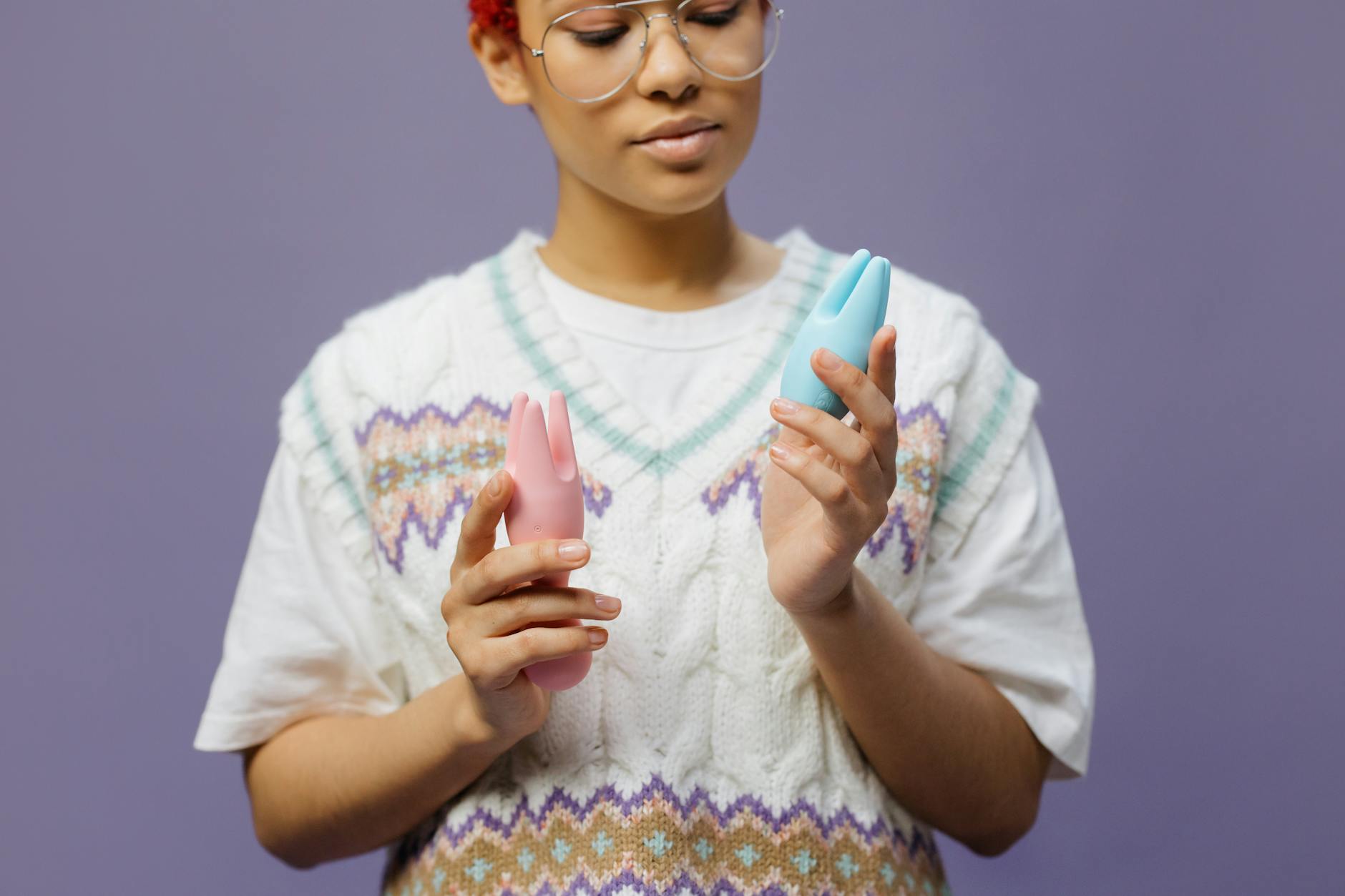
If you've tried a wand vibrator and felt like the stimulation was either overwhelming or too broad, you're not alone. Wands are the default recommendation, which means millions of people assume their clitoris is just "too sensitive" when really the tool is wrong. It's a biomechanical mismatch, not a personal flaw.
Here's the thing: wands deliver high-frequency vibration across a wide surface area. For some bodies, that's perfect. For others, it's like turning up the volume on a speaker instead of adjusting the focus. Lemon vibrators use suction instead, which concentrates sensation on a smaller zone and lets you control intensity with precision. The difference isn't subtle. It's the reason people who've struggled with wands for years suddenly find pleasure they didn't think was possible.
Wands typically use between 1,800 and 7,000 vibrations per minute. All that speed creates a diffuse, buzzing sensation that spreads across the entire external vulva. The vibration is pure frequency. There's no variation in how it stimulates tissue. You turn it on, press it against yourself, and either the intensity is right or it's too much.
The problem: your clitoris has a dense concentration of nerve endings (around 8,000 of them in the glans alone), but they're not evenly distributed. Some regions are hypersensitive. Some respond better to rhythmic patterns than constant buzz. And pressing a flat or broad vibrating head against sensitive tissue can actually create a numbing effect over time, which is why people often crank up the power when what they actually need is a different approach entirely.
Lemon clitoral vibrators work on a completely different principle. Instead of vibration, they use gentle suction combined with pulsing patterns. The suction creates a micro-massage effect that stimulates nerves without the harshness of direct vibration. Think of it as the difference between someone tapping your shoulder rapidly versus someone using light pressure and releasing rhythmically.
The mechanism matters because:
Precision. Suction concentrates sensation on a small, focused area. You're not stimulating your entire vulva. You're stimulating the exact spot you want, which means you can locate your most responsive zones with accuracy.
Gentleness. Suction doesn't numb tissue the way prolonged vibration can. People with sensitive clitorises often report that traditional vibrators feel intense for 30 seconds and then suddenly feel like nothing. With suction-based lemon vibrators, sensation stays consistent and often deepens over time.
Control. Wands typically have 2-3 intensity settings. Lemon vibrators often offer more granular control, which matters wildly when you're exploring sensitivity. You can start at pattern 1 and work your way up instead of jumping from 0 to "overwhelming."
There's actual neurology here. Your nervous system adapts to constant stimulation through a process called habituation. High-frequency vibration is constant. It doesn't change rhythm. It doesn't pulse or rest. Your nerve endings gradually stop firing at the same intensity, which feels like the device stopped working even though it didn't.
Suction-based stimulation avoids this partly because it incorporates rhythm and variation. Most lemon vibrators pulse in patterns that mimic natural arousal building. Your body doesn't adapt the same way because the stimulus is changing.
For people with genuinely sensitive clitorises (not just "sensitive because wands are too intense" but actually heightened nerve sensitivity), this difference is massive. It's the reason our clients who thought they "couldn't use vibrators" report having the best orgasms of their lives once they try suction.
Here's something else wands miss: not all clitoral tissue is the same thickness or texture. Some people have more delicate tissue around the glans. Some have a pronounced frenulum that's extra sensitive. Traditional wand vibrators are blunt instruments. They don't adapt to individual anatomy.
Lemon vibrators, because they use suction and because they're typically smaller, conform better to individual clitoral shape. The sensation is more intimate, more tailored. You're not fighting the tool's geometry. The tool is responding to yours.
This is also why people who've experienced pelvic trauma, who are recovering from numbness medications, or who have conditions like vulvodynia often find lemon vibrators more approachable than wands. The intensity can be dialed down further. The sensation is less overwhelming. The precision means less collateral stimulation of painful or uncomfortable zones.
Wands are about speed. More vibrations per minute equals intensity. But intensity and pleasure aren't the same thing. Your nervous system responds to patterns as much as to raw frequency.
Lemon vibrators get this. They offer pulsing patterns, rhythmic variations, even pre-programmed sequences that change over time. This matters because your arousal doesn't build linearly. It's more textured. It ebbs and flows. A tool that matches that rhythm is going to feel more natural, more responsive to where you actually are in the moment.
You can feel the difference between a wand's monotone buzz and a lemon vibrator's rhythmic suction within the first ten seconds. It's why people often say suction feels "smarter" or "more intuitive." It's not magic. It's better design for how your nervous system actually works.
I want to be clear: wands aren't bad. They're just not ideal for everyone, especially not for people with sensitive clitorises. Wands work beautifully for:
People who prefer broad, diffuse stimulation across the entire vulva and perineum. Some bodies love that spreading buzz. If that's you, wands are great.
Partner play where you're using the toy on someone else. The larger surface area and longer handle can make wands easier to control during partnered sex.
Folks who like very high intensity and have tissue that doesn't get numbed out by constant vibration. Not everyone experiences habituation. If you're one of those people, wands deliver power.
But if you've had a wand and felt like the sensation was too intense, too numb, or just wrong somehow, it wasn't you. It was the tool. Trying a lemon vibrator or another suction-based clitoral vibrator will likely reveal that your clitoris isn't too sensitive. It just needed a different kind of touch.
Studies on suction-based versus vibration-based clitoral stimulation have consistently shown that suction creates more localized, intense sensation with less overall stimulation of surrounding tissue. One small 2021 study found that people using suction-based devices reported higher orgasm consistency and less discomfort during extended use compared to traditional vibrators.
The clinical observation aligns with user experience: people who've struggled with vibrators for years find success with suction. It's not placebo. It's biomechanics.
If you're sensitive and considering trying a lemon vibrator for the first time, start with the lowest setting. Give yourself permission to use it for just five to ten minutes. You're not trying to have an orgasm on day one. You're gathering information about how your body responds to a different kind of stimulus.
Pay attention to whether the sensation feels more precise, whether you can locate your most responsive spots more easily, and whether numbness (that weird fading feeling) happens. Compare that to your experience with wands. You'll know pretty quickly whether suction is a better fit.
Many people find that their sensitivity preferences shift. Maybe wands were overwhelming before, but now you're curious. Or maybe suction was a revelation and you never want to go back. Your body is allowed to have preferences, and the right tool is the one that works for you right now.
The biggest misconception about sensitive clitorises is that they need less stimulation. Sometimes they need different stimulation. They need precision. They need tools that let you build sensation gradually instead of landing at maximum volume immediately.
Lemon vibrators deliver that because suction-based stimulation is inherently more controllable. You're not fighting the device's power. You're working with it.
If you're still using a wand because you think that's the only option, or because you assume your sensitivity is a limitation, I want you to know: it probably isn't. It's just that you haven't found the right tool yet. That tool might be a suction-based lemon vibrator. And your pleasure might be waiting on the other side of that switch.
Not necessarily less intense, but different in how intensity feels. Suction-based clitoral vibrators deliver sensation that feels more focused and controllable. You can reach high intensity with suction, but you can also modulate it more precisely. Wands tend to feel more all-or-nothing. For sensitive tissue, that difference in control often feels like it's less intense even when the physical intensity is comparable.
Most people experience significant sensation from suction, but not everyone prefers it. Some bodies respond better to traditional vibration. Some people like both depending on their mood or cycle. The best part is that you can try different tools and notice what actually works for you instead of assuming you're broken when a wand doesn't feel right.
Most people feel something within 10-30 seconds. If you're used to wands and expecting that immediate buzz, suction might feel subtle at first. Give it a minute or two. The sensation builds and deepens. If after 3-5 minutes you're feeling nothing, try moving to a different spot on your clitoris. Sometimes it takes exploring to find your most responsive zone.
Yes, and it's often exactly what helps. Numbness from prolonged vibration is habituation. Your nervous system stopped responding to that specific stimulus. A completely different sensation (suction instead of vibration) can "wake up" nerve endings. People who thought they'd lost sensitivity often regain it with suction-based toys. See how lemon vibrators improve sensitivity after years of numbness for more detail.
It depends on your body, but for people with sensitive clitorises, suction often delivers more reliable orgasms. That's because you can maintain the right intensity without habituation. You're also getting the benefit of precision. But some bodies prefer vibration, some like both, and some prefer neither. The goal is finding what works for your nervous system, not what works theoretically.
You don't have to choose. Some lemon vibrators include both. You can also use multiple tools. Many people find that starting with suction to build sensation and then switching to vibration creates an interesting variation. There's no rule. Your pleasure is allowed to be complex.
Try something different for a few weeks. Pay attention to whether sensation feels consistent, whether you can locate responsive spots, and whether numbness happens. If a different tool (like a lemon vibrator) solves those problems, you weren't too sensitive. You just needed better design. If the problem persists across multiple tools and approaches, then you might be dealing with actual heightened sensitivity that benefits from other strategies like pelvic floor work or professional support.
Rarely, and usually only if the person has very low sensation and needs maximum power to feel anything. But even then, suction combined with lower intensity often delivers better results than high-intensity vibration. If someone's sensitive tissue keeps getting numb with wands, suction is almost always worth trying before assuming you need "more powerful" tools.
Most people do. Start at the lowest setting and give yourself permission to use it for just a few minutes while you learn how your body responds. The switch from vibration to suction can feel subtle at first, but usually clicking within the first session or two. If you find yourself wanting to use it for longer, that's a good sign it's a better fit than wands were.