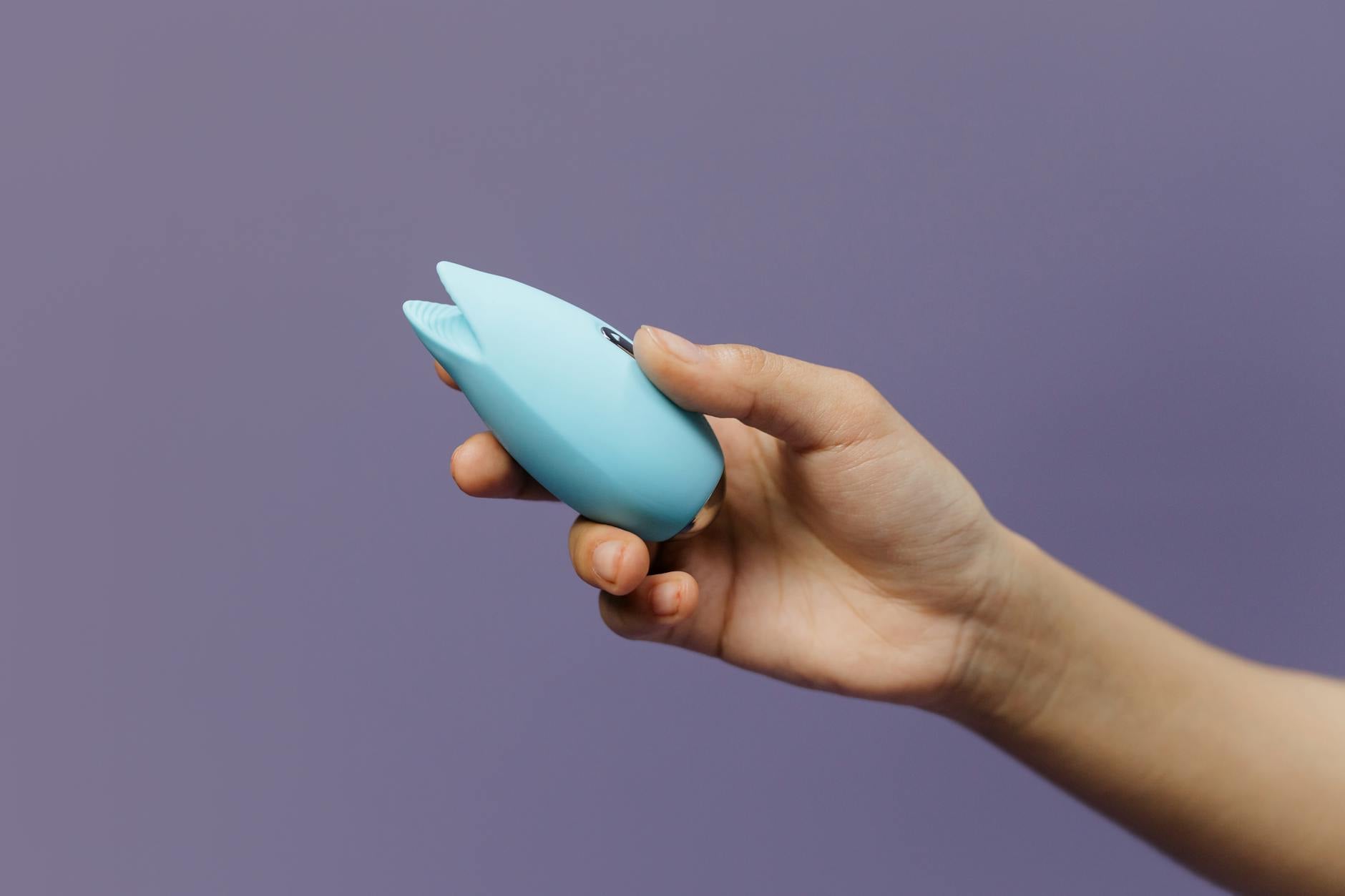
How to Use Lemon Vibrators When Your Partner's Sex Drive Doesn't Match Yours
Desire mismatch is one of the most common relationship tensions no one talks about. Here's how lemon clitoral vibrators can help you meet your own needs without creating more distance.
Desire mismatch doesn't announce itself like infidelity or betrayal. It just settles in. One partner wants sex twice a week. The other wants it twice a month. One person initiates every time. The other feels pressured when touched. Neither of you is wrong. Both of you end up frustrated, rejected, or guilty. And sex itself becomes less about connection and more about a problem you're failing to solve together.
Here's what I tell couples in my practice: using a lemon clitoral vibrator when you have a lower-desire partner isn't settling. It's actually the thing that prevents resentment from poisoning everything else.
Most people assume mismatched sex drive means one person stopped being attracted to the other. That's rarely true. What's actually happening is usually one of these things:
Stress, medication, hormones, work exhaustion, or health changes suppress desire in the higher-drive partner's partner. Or one person has always had a lower libido but neither of you acknowledged it until now. Or one partner is dealing with past trauma that makes sex feel unsafe even though they love their partner deeply.
The real problem isn't the mismatch itself. It's what couples do next. The higher-desire partner stops initiating to avoid rejection. The lower-desire partner feels guilt every time their partner gets close. Sex stops happening. Resentment grows. And suddenly you're both lonely in the same bed.
When you use lemon sexual toys solo, you're not asking your partner for anything. You're meeting a legitimate need on your own terms, in your own time, without waiting for someone else to be in the mood.
That sounds selfish on paper. In practice, it's the opposite. Solo pleasure with a lemon vibrator releases a lot of the pressure that's been building. You stop hoping sex happens and start taking responsibility for your own satisfaction. And here's what happens next: you're actually happier. Calmer. Less resentful. More affectionate with your partner outside the bedroom.
The lem vibrator works particularly well for this because the suction mechanism feels different than penetrative sex or manual stimulation. It's focused, intense, and relatively quick compared to other toys. If you've got 15 minutes before your partner comes home, you can actually take care of yourself. That matters more than you think.
Here's what I recommend to clients who feel guilty about masturbating when their partner has a lower sex drive.
First: stop thinking of it as separate from your relationship. Your sexual pleasure isn't a backup plan for when your partner isn't available. It's part of your own wellbeing. Full stop. That distinction is important because shame and guilt actually suppress arousal and make the experience less satisfying.
Second: create a ritual that works for your life. Some people schedule it (Saturday morning, 15 minutes). Others use it as a transition between work and home. Some use it when their partner is asleep, some when the house is empty. Pick whatever feels most natural and sustainable.
Third: actually enjoy the lemon vibrators and toys you have. Spend time figuring out what patterns work for your body. Try different intensities. Maybe you like the Lem on pattern 3 to start, then moving to pattern 5. Or maybe you prefer lower intensity for a longer session. You're not racing toward an orgasm for someone else's benefit. You get to explore.
This is where couples often get stuck. The higher-desire partner thinks using a toy together means "I'm taking control so you don't have to do anything." The lower-desire partner hears "You're not enough for me." Both people end up more hurt.
Here's how to actually do this without that dynamic:
Start a separate conversation outside the bedroom. Not during sex, not when anyone's frustrated. Something like: "I've been using my lemon vibrator solo and it's been really helpful for me. I'd like to also use it sometimes when we're together. Not as a substitute for you, but as something we do together. Would you be open to that?" That framing matters because it's honest and it's not asking for sex. It's asking for presence.
When you do use it together, your partner's job isn't to perform or to keep up. They can touch you while you use the vibrator. They can watch. They can be on their phone honestly if sex still feels like pressure. The point is that you're in the same room, connected in a lower-stakes way.
Many couples find that this takes the pressure off penetrative sex entirely. Suddenly sex doesn't have to result in orgasm for both people simultaneously. It doesn't have to look a certain way. You can use a lemon clitoral vibrator while your partner holds you. Or you can use it while they're next to you doing their own thing. The expectation flattens out, and both people relax.
Using toys is never the real solution to mismatched desire. The solution is understanding why the desire is mismatched in the first place.
If your partner has lower desire because of stress or work, that's a separate problem from a partner who's never had high desire. If it's medication side effects, that's different than if it's emotional disconnection. If it's past trauma, that's very different than if it's just a mismatch in what you each find arousing.
You need to know which one you're dealing with. And that conversation often needs a therapist or coach, not just the two of you talking in the dark.
What a lemon vibrator does is buy you time and reduce resentment while you're figuring that part out. It's not the final answer. It's the thing that keeps you both sane while you're working toward a real answer.
I've seen couples where the higher-desire partner was so caught up in wanting sex that it became the entire relationship problem. Once they started using lemon vibrators solo, they realized the real issue was loneliness. They wanted to feel wanted. They wanted physical affection. Sex was just the language they'd learned to ask for those things.
Sometimes addressing that shifts the whole dynamic. Suddenly the lower-desire partner feels less pressured, which ironically sometimes makes them want sex more. Or both partners accept that this is the frequency and intensity they have, and they build intimacy in other ways.
Other times, couples realize they actually aren't compatible and that clarity lets them make real choices instead of staying in resentful limbo.
What almost never happens is that resentment quietly builds and everything magically gets better. Using lemon sexual toys is the thing that breaks that silence. It says: my pleasure matters. Your pleasure matters. And we don't have to solve this by waiting for both of us to want the same thing at the same time.
Completely normal. Research suggests that about 70 percent of couples experience some level of desire discrepancy at some point in their relationship. It's one of the most common issues I work with clinically. The difference between couples who stay together happily and those who don't usually comes down to how they handle the mismatch, not whether the mismatch exists.
Possibly, if you don't have a clear conversation first. But that usually says more about your partner's insecurity than about the vibrator itself. Here's the thing: a lemon vibrator does something a partner can't physically do. It's not better or worse. It's different. If your partner interprets it as "you're not enough," that's about their own fears, not about the toy. That might be worth exploring with someone neutral like a therapist. Also, if you're using it solo, your partner doesn't have to know unless you want them to.
It can improve the emotional experience of sex and reduce the performance pressure around it. Whether it improves frequency depends on what's causing the mismatch in the first place. If it's stress or medication, taking the pressure off might help both of you relax, which can increase desire. If it's deeper incompatibility, tools help you coexist more peacefully, but they don't fix the incompatibility itself.
Start outside the bedroom, outside of any sexual context. Pick a calm moment and be specific about what you want and why. Instead of "I want to use a vibrator during sex," try "I've found that using a lemon vibrator helps me feel less pressure and actually more present with you. Would you be willing to try that together?" Make it about you feeling better and being more available, not about what they're not providing. Also, if they say no initially, don't push it. Sometimes people need time to sit with the idea.
That's a bigger issue than desire mismatch. That's avoidance, and it usually means there's shame, past trauma, or deep fear underneath. You might be able to use lemon vibrators solo as a way to take care of yourself, but the real problem won't be solved by toys. You'll probably need to work with a couples therapist to create safety around sex and intimacy more broadly. If your partner won't go, you have to decide if you can live with that limitation.
Absolutely. Your pleasure isn't contingent on your partner's desire. If you're in a relationship where one partner has no interest in sex and the other does, you have three basic options: accept that sex isn't part of the relationship, address the underlying reason their desire is completely gone, or end the relationship. Using lemon clitoral vibrators solo doesn't solve the mismatch, but it does help you survive it without turning into a bitter version of yourself.
Desire mismatch is one of the loneliest parts of being in a long-term relationship. You're living with someone you love and wanting them, but they don't want you the same way back. Or you're dealing with your own lack of desire and feeling guilty about disappointing someone who cares about you.
Lemon vibrators don't fix that loneliness. But they do give you a way to stop waiting for permission to feel good. They give you back agency. And sometimes that's the thing that makes it possible to actually address what's underneath the mismatch instead of just resenting each other silently.
If you're dealing with desire mismatch in your relationship, consider using one of our lemon sexual toys as part of a broader conversation with your partner. And if that conversation is hard, that's actually useful information. It might mean you need some help from a therapist or couples coach to navigate it. Either way, your pleasure matters. Don't let a mismatch convince you otherwise.